

Use & Care
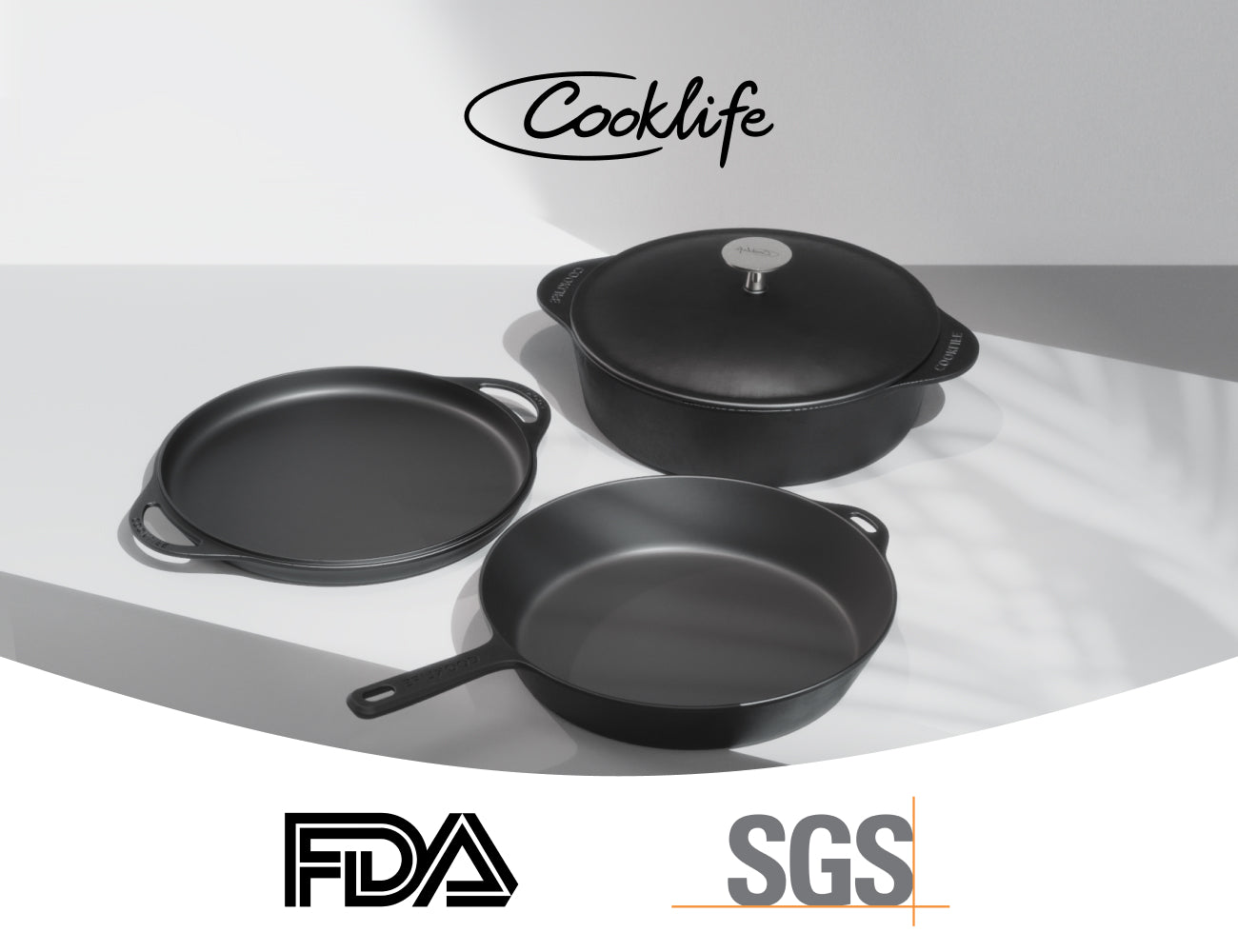
Yes, all our cookware is 100% non-toxic, including the enameled cast iron pan, and our products are FDA approved.
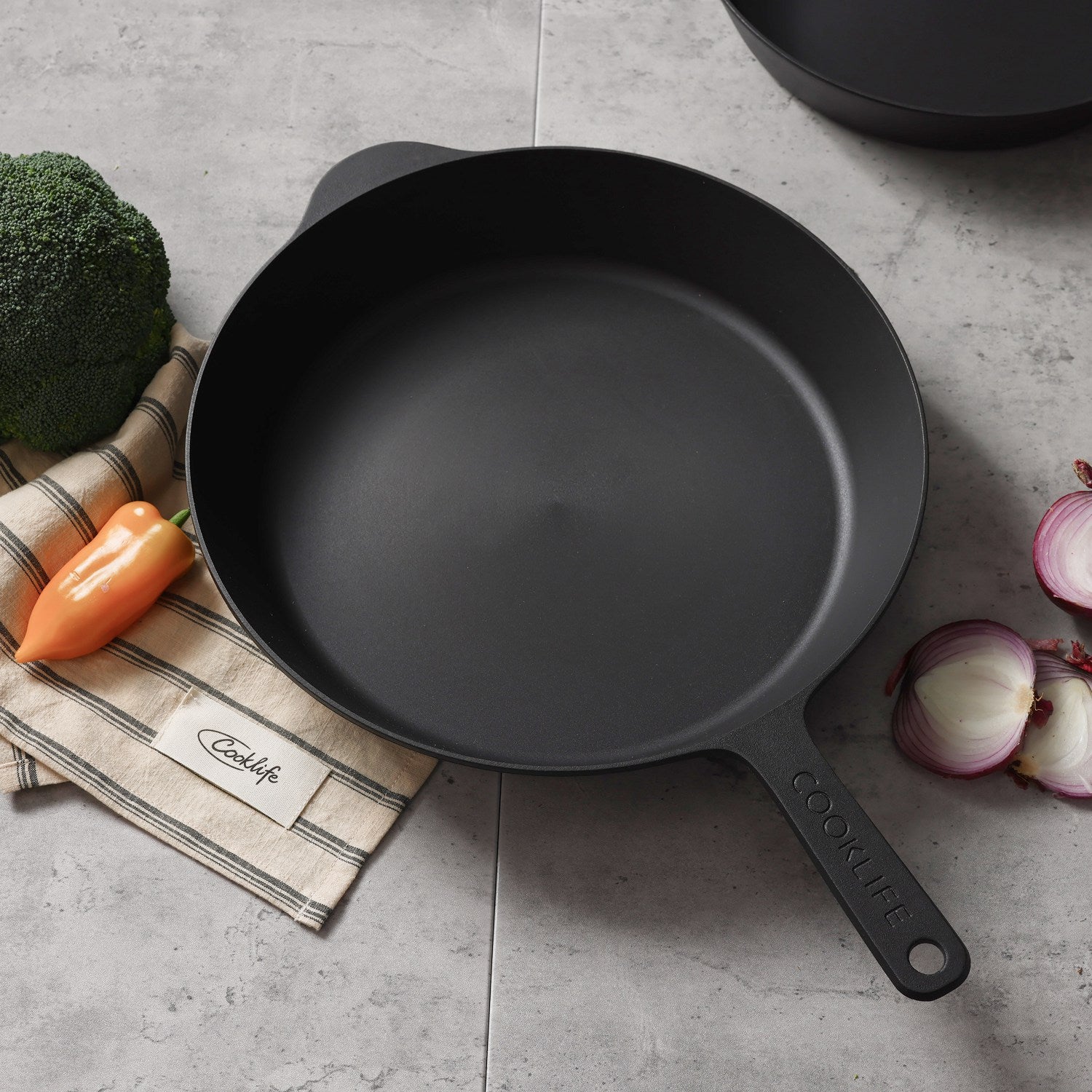
The 10"/10.25" skillet is made of 100% cast iron without any other metals mixed.
The Cooklife Cast Iron Cookware are all made of 100% cast iron without any other metals mixed.
Absolutely, you can use metal utensils such as spoons, forks, and spatulas while cooking in the Cooklife cast iron skillets.
Cast iron is the most durable metal you'll ever cook with. That means any utensil is welcome - silicone, wooden, and even metal.
Cooklife uses vegetable oils for seasoning that are generally considered kosher. However, it is best to check the packaging or contact Cooklife directly for specific kosher certification.
Cooking acidic foods (like tomatoes or citrus) can potentially damage the seasoning if done frequently. It’s advisable to avoid prolonged cooking of acidic foods or to use a well-seasoned pan to minimize any impact.
Guide
Frequently asked questions
Cooklife cookware uses linseed oil for seasoning.
Cooklife uses primary iron-pig iron.
100% Pure Cast lron.
Yes, all our cookware is 100% non-toxic, including the enameled cast iron pan, and our products are FDA approved.
Cooklife cookware is manufactured in Jiangsu Province of China; Cooklife is headquartered in Hong Kong, China.
1. Stack for storage with Pot Separator Protectors will reduce friction and protect your cookware from scratches and damage.
2. Plus, the gap created by the Pot Separator Protectors allows stacked cookware to be separated during storage to prevent moisture and rust.
3. Perfect for day-to-day storage of your pot, great Dutch Oven accessories.
4. Save you lots of storage space in your kitchen.
It is hard to say if Cooklife Cast Iron could go into the dishwasher.
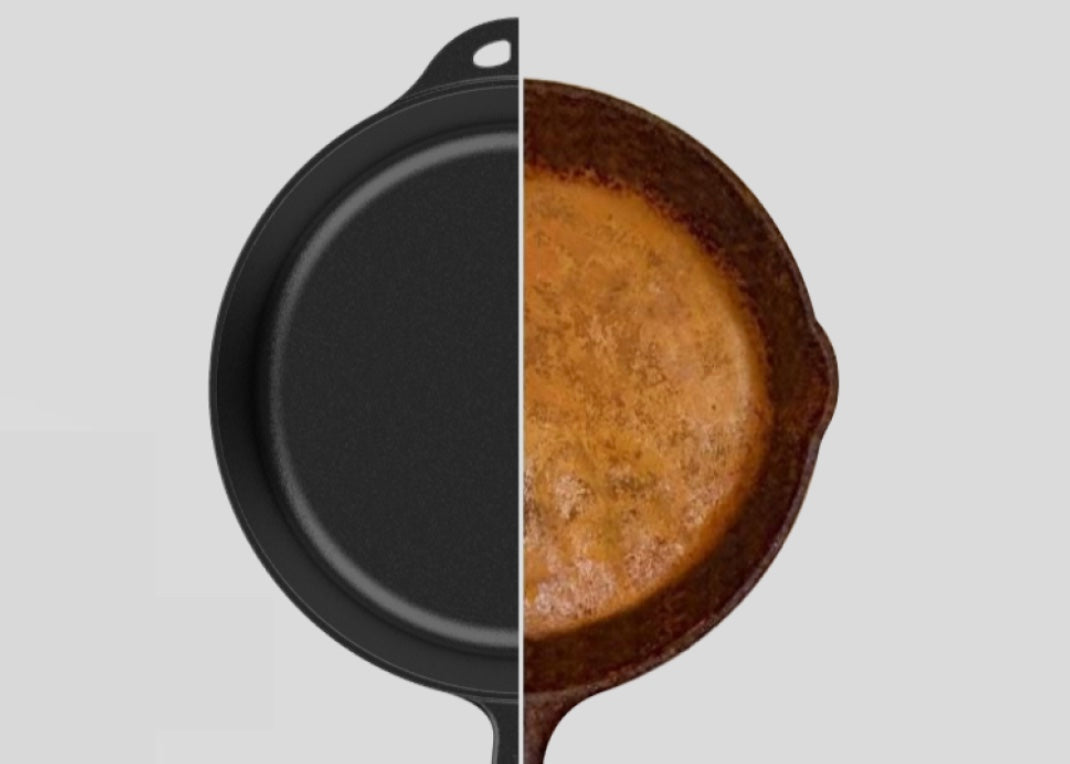
Before we think about throwing the cast iron cookware into the dishwasher, we should know what the dishwasher will wash off. This includes the food residue or oil, as well as the pre-seasoned layer. What would happen if you wash off the pre-seasoned layer? It will get rusty and sticky.
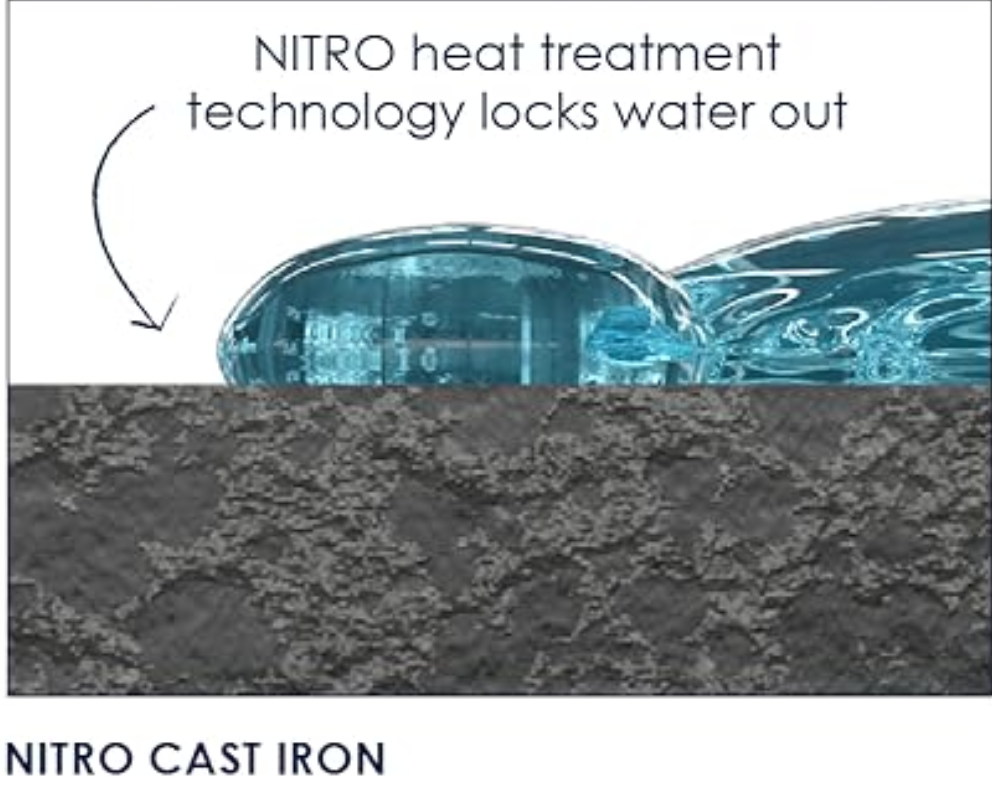
But Cooklife Cast Iron is a little different. Cooklife Cast Iron has a professional Anti-Stick Process which forms an adequate protective layer. The innermost is a nitriding layer that is a dense and smooth layer, providing the most important capacity to protect cast iron from rust. Then there is the oxidation layer which could strengthen the nitriding layer. The outermost layer is a well-seasoned layer which is the secret to keeping the non-stick property for the cast iron and will be finished before delivery.
Now, let us think about what will happen if we throw Cooklife Cast Iron into the dishwasher.
After the first time washing, the seasoning layer comes off and the surface will be mottled. The cast iron will get easy to stick, no exception for Cooklife. So you need to re-season the cast iron before the next use.
Another thing that is important to know is that dishwashers have different cleaning powers, lower or higher. After several times washing in the dishwasher, the oxidation layer and nitriding layer may be destroyed. The times of destruction depend on the power of the dishwasher. We have tested it 5 times, and the Cooklife Cast Iron is still antirusting without the seasoning layer.
We do NOT recommend putting the cast iron into the dishwasher, not just for other cast iron, but also Cooklife. But if you burn the food by accident and it leaves a sticky residue that is hard to remove. Cooklife Cast Iron will be the best choice for going into the dishwasher without rusting worries. Don’t forget to re-season it again.
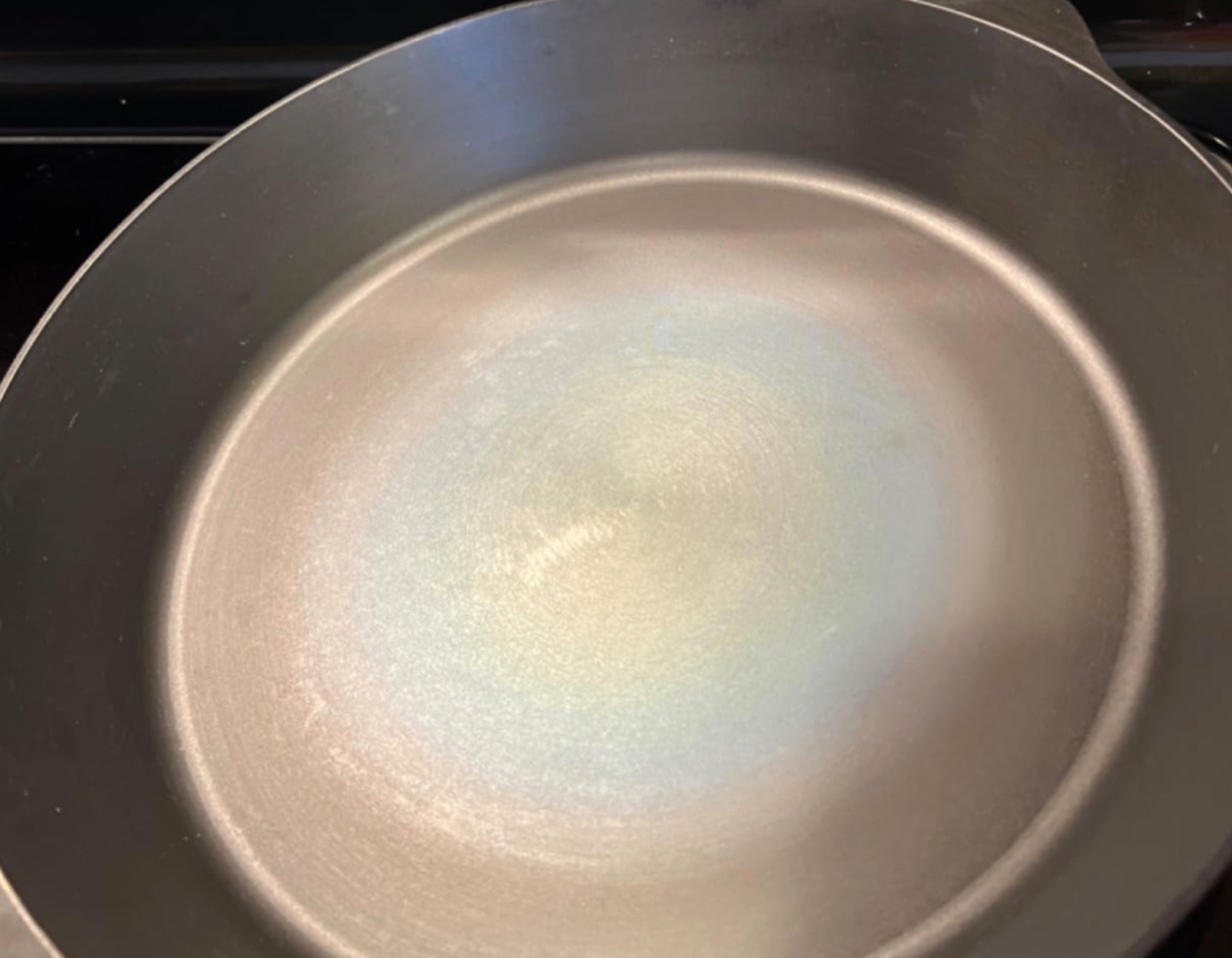
When you first begin using a new cast iron skillet or griddle, it’s completely normal for the cooking surface to become patchy or uneven in color. This is expected, especially with high-quality cookware.
Cast iron naturally becomes non-stick over time through the development of thin, interlocking layers of seasoning. Every time you cook, the pan gains and loses seasoning in different spots, which may lead to some discoloration in the early stages. However, as you continue to build up seasoning, you’ll notice that the surface will darken and the color will become more even.
If you find this breaking-in process challenging, we recommend using a bit more oil or fat during cooking. Regularly preparing recipes that help add seasoning to the surface can also speed up this process and improve the pan's performance.
Black flakes can occur if the seasoning is not properly bonded to the pan or if it has become damaged. Scrub off the flakes, clean the pan, and reapply a thin layer of oil before reseasoning to restore the surface.